
By Genio, founder of Luminary Mushrooms and Health Canada NPN license holder
People do not buy Lion’s Mane because they want another number on a label. They buy it because they are interested in focus, cognitive performance, and long term brain health. A useful buying guide should start with those goals, examine what human research actually found, and then show whether the product provides a meaningful daily amount.
What human Lion’s Mane research has found
Human evidence is still developing, but it is more substantial than the original article suggested.
A 2009 randomized, double blind, placebo controlled trial followed 30 adults aged 50 to 80 with mild cognitive impairment. Participants in the Lion’s Mane group consumed 3 g daily for 16 weeks. Their cognitive function scores improved compared with placebo at weeks 8, 12, and 16. Scores declined after supplementation ended. This was a small trial, so it is promising evidence rather than a guarantee. Read the 2009 study.
A 2023 randomized pilot study tested 1.8 g daily in 41 healthy adults aged 18 to 45. Participants performed faster on a Stroop task after a single dose, and researchers observed a trend toward reduced subjective stress after 28 days. The authors stressed that the sample was small and that larger studies are needed. Read the 2023 study.
Another randomized trial studied Lion’s Mane fruiting body for 12 weeks and reported improvements in some cognitive measures. Researchers proposed that compounds in the fruiting body, including hericenones, may be relevant to the observed effects. Read the fruiting body study.
These studies used different preparations, populations, and outcome measures. They should not be treated as proof that every Lion’s Mane product creates the same result. They do show why the daily amount and the part of the mushroom matter.
Luminary provides 2 g from fruiting body
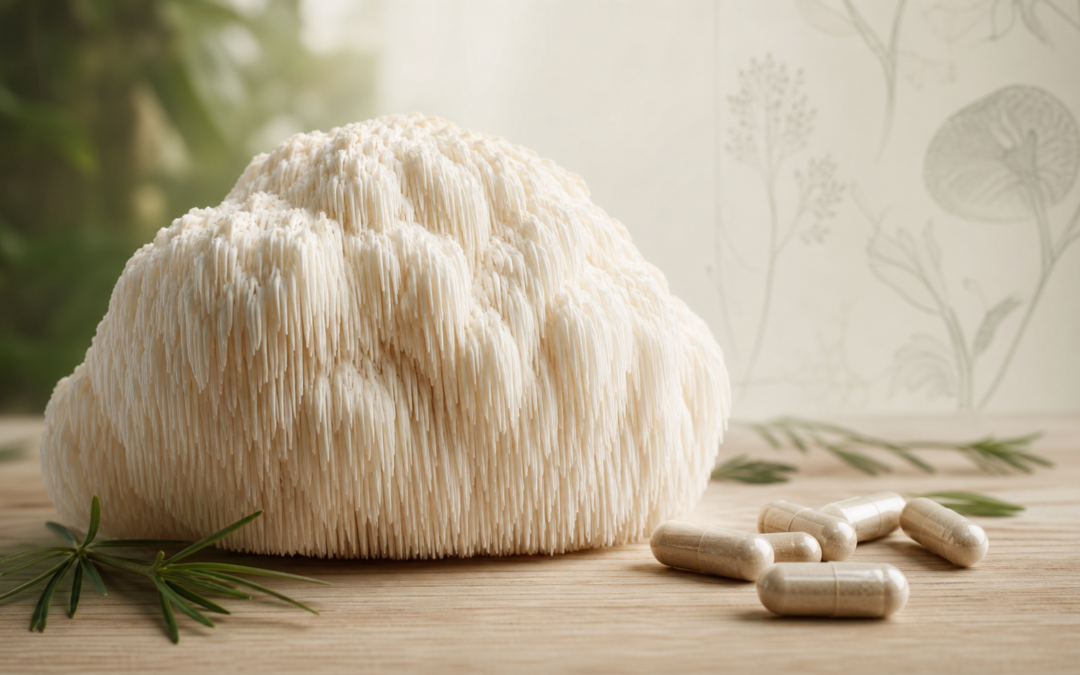
Each Luminary Lion’s Mane capsule provides 500 mg of Hericium erinaceus. The licensed adult direction is two capsules, twice daily. Taking two capsules in the morning and two in the evening provides 2,000 mg, or 2 g, each day.
That 2 g serving sits between the 1.8 g and 3 g daily amounts used in the human trials discussed above. It would be inaccurate to call 2 g a universally proven effective dose because Lion’s Mane research has not established one universal standard. It is accurate to say that Luminary provides a substantial daily amount aligned with the range used in relevant human research.
Luminary also uses the fruiting body. That is important because the fruiting body contains fungal cell wall compounds and has been used directly in human Lion’s Mane research. It also gives buyers a clear answer about which part of the mushroom they are consuming.
Why beta glucans matter
Beta glucans are polysaccharides found in fungal cell walls. They matter because immune cells have receptors that recognize beta glucan structures, including Dectin 1. This recognition is part of the way the innate immune system detects and responds to fungal material. Research also shows that biological activity varies with the beta glucan’s source, structure, branching, and preparation. A generic total polysaccharide claim does not tell the full story. Read the beta glucan overview.
This connects directly to Luminary’s Health Canada licence. Lion’s Mane NPN 80126702 is authorized as a source of fungal polysaccharides with immunomodulating properties. You can verify the licence, ingredient amount, dose, and authorized purpose in Health Canada’s Licensed Natural Health Products Database.
For more on reading mushroom labels, see how to read a mushroom supplement label. For a deeper explanation, read fruiting body vs. mycelium and why the source matters.
If you want Lion’s Mane made from fruiting body, with a full 2 g daily serving and an active Health Canada NPN, visit the Luminary Lion’s Mane product page.
Follow the product label. Consult a health care practitioner before use if you take prescription medication. Do not use while pregnant or breastfeeding. Stop use if hypersensitivity or allergy occurs.